
About Us
Sidebar
Our History
In 1998, UofL established the Institute for Public Health Research to focus efforts on training the next generation of clinical researchers. The institute had a five-year NIH Clinical Research Curriculum (K30) Award and offered MSPH and PhD degrees in both Epidemiology–Clinical Investigation Sciences and Biostatistics–Decision Sciences.
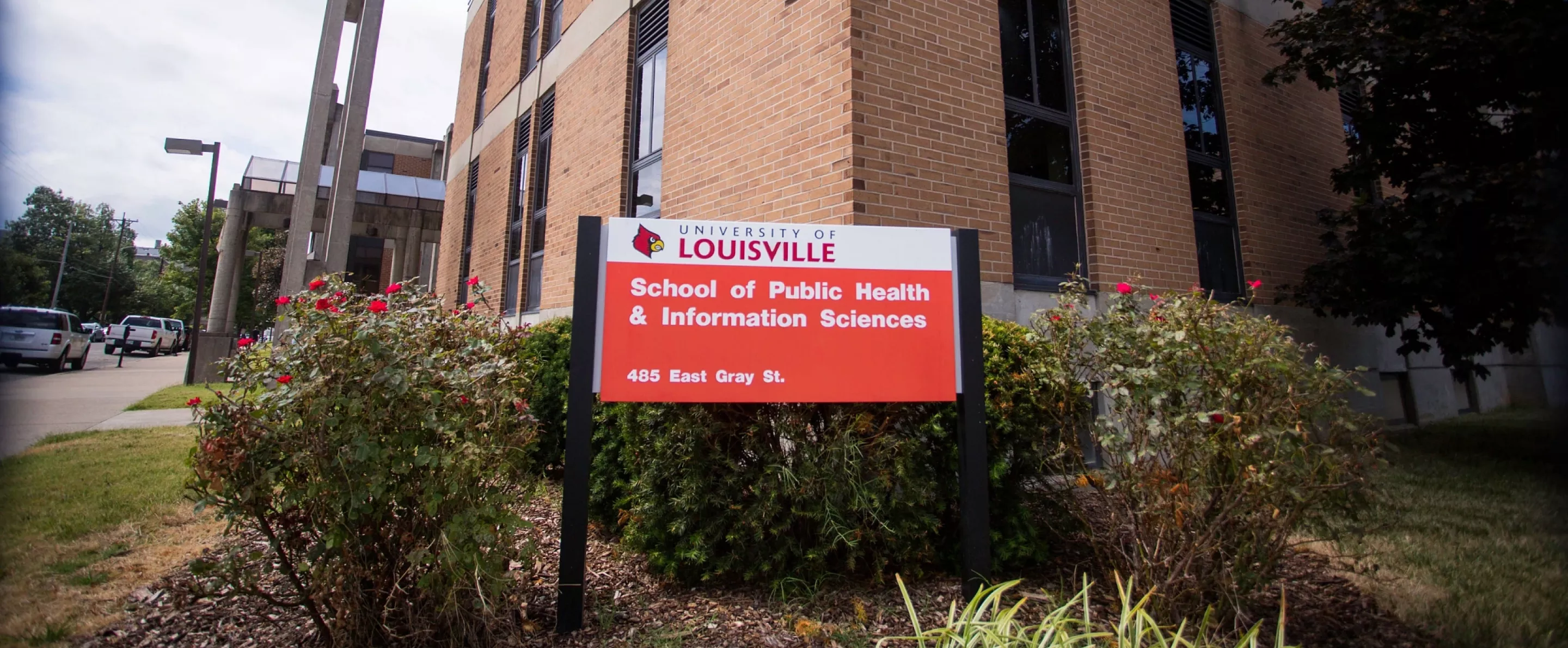
The School of Public Health and Information Sciences (SPHIS) was established in 2002 and remains the newest school at the university. SPHIS obtained initial CEPH accreditation in 2007. In 2012, Richard Clover, MD, the founding Dean, announced his decision to step down as SPHIS dean after founding the school and leading it for 10 years. The university conducted a national search and named Craig H. Blakely, PhD, MPH, as Dean in April 2013 who served for 10 years until his retirement in 2023. W. Paul McKinney, MD, served as Interim Dean from July 2023 until the arrival of Kathryn Cardarelli, PhD, MPH, in April 2024. In March 2025, Cardarelli was named as Interim Provost and permanent Provost in December 2025. Kathy Baumgartner, PhD, currently serves as Interim Dean. Eric Walsh-Buhi, PhD, has been named SPHIS' next dean effective October 1, 2026.
Did you know? The original School of Public Health at University of Louisville was open from 1919-1923, making it one of the nation’s first public health schools. Read more.

Quick Facts
Students Enrolled
Academic Programs
First Generation College Students
Mission
Pursue bold and collaborative approaches to education, research, practice and policy focused on the enhancement of public health in Louisville, Kentucky, nationally and internationally.
Vision
Optimal health and well-being for all.
Value Statements
Inform through science to support changes to laws, regulations, policies and institutional practices to improve public health and healthcare systems.
Work with communities to build mutually beneficial relationships that value the expertise of all partners while sharing ownership and decision-making.
Cultivate an environment that promotes a space where everyone is welcomed, valued and has access to the same opportunities.
Education that provides students with critical thinking skills to become independent life-long learners and future public health leaders.
Extend respect to all individuals and their right to differing positions and opinions.
Pursue rigorous and innovative scholarship that advances the work of public health and influences the profession and community.