

RURAL Study
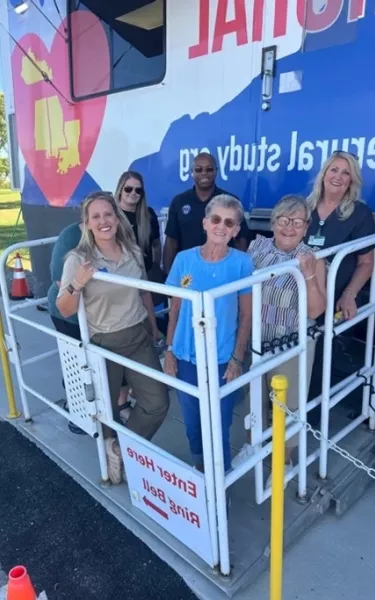
The RURAL (Risk Underlying Rural Areas Longitudinal) Heart and Lung Study is a prospective epidemiology cohort study funded by National Institutes of Health (U01 National Heart, Lung, Blood, Institute) that aims to bridge the critical gap in research in heart and lung disorders among rural communities in the Mississippi Delta and Appalachian regions of the Southeastern United States. The RURAL Cohort Study team is led by a group of multidisciplinary researchers from 16 different U.S. institutions. With our mobile exam vehicle, we will travel to rural counties to research people’s health and engage with communities. We hope that our research findings will promote the health of rural communities.
Focusing on ten rural counties in Alabama, Mississippi, Louisiana, and Kentucky, this project seeks to recruit 4,600 adults (ages 25-64) to volunteer as study participants. Our target enrollment in Kentucky is approximately 1,600 participants (35% of total study) who are residents of Breathitt, Boyle, Garrard, and Perry County.
Kentucky Core: Faculty Leadership at UofL
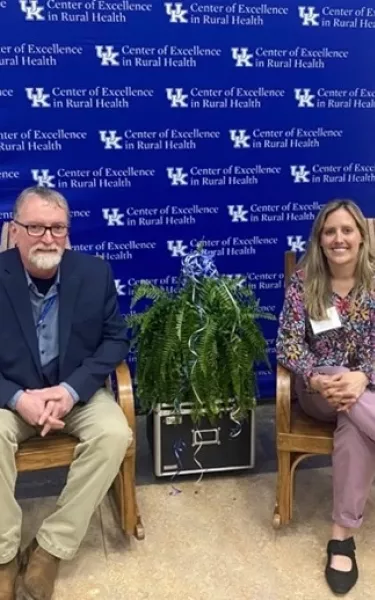
The Kentucky Core is led by Dr. Stephanie Boone, Associate Professor in the Department of Epidemiology and Population Health at UofL School of Public Health and Information Sciences. The KY Core community engagement and research coordinator is Dr. Stephie Abraham, PhD(c) and Graduate Research Assistant is Scotland Steward, both PhD candidates in Epidemiology. Collaborations include UK Center for Excellence in Rural Health in Hazard, KY (Mace Baker, Interim Center Director, and Sierra Williams, Community Engagement Coordinator). To learn more about the KY Core Team visit our website (Community Activities and Recruitment in Kentucky - The RURAL Cohort Study). Our contact email is ruralky@louisville.edu.
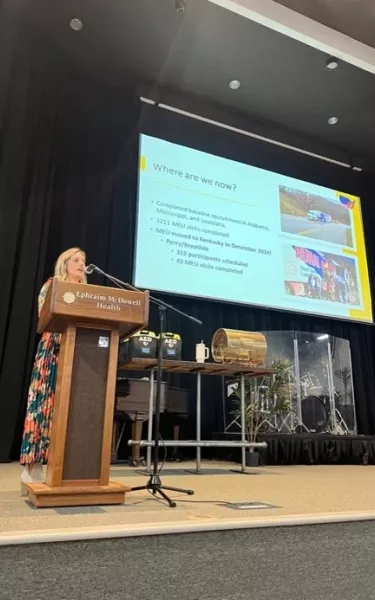
Where are we now?
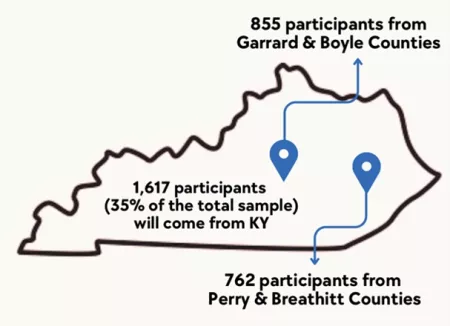
From January to September 2025, 739 Perry and Breathitt County residents completed baseline exams! The MEU is now located at Millennium Park in Danville, and baseline visits for Boyle and Garrard County residents began on September 28th. Before moving to Kentucky, the RURAL Study had nearly 4,000 participants complete their MEU baseline exams Alabama, Louisiana, and Mississippi.
Community Events & Local Involvement
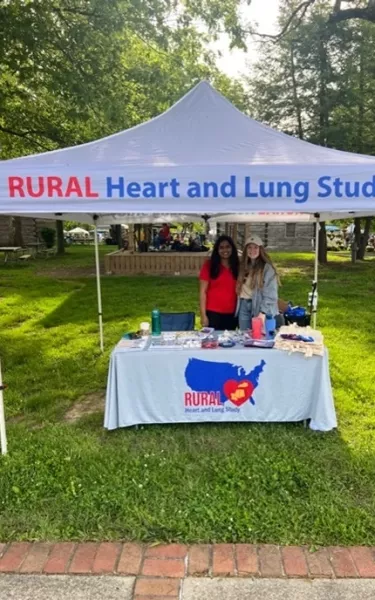
Our research is built on community engagement, connecting with the people, places, and organizations that make rural Kentucky strong. Our Kentucky Core works hand-in-hand with residents of these counties to bring heart and lung health education and awareness to life in their communities. From fairs and festivals to back-to-school bashes and food pantry events, we love meeting neighbors where they are. Our success is driven by community collaboration, and we are grateful for the dedication of our Community Advisory Board (CAB) members, community leaders, and local organizations who have helped us make meaningful connections in these areas.
Want to see where we’ll be next? Follow us on Facebook RURAL Heart & Lung Study – Kentucky, and Instagram @ruralstudykentucky, to stay up to date on upcoming events in Boyle and Garrard Counties.
FAQs
Residents of rural Southern communities experience shorter, less healthy lives than those in other parts of the United States. The basis of this disproportionate burden of heart, lung, blood, and sleep disorders is unclear. However, within the same Southern regions, some counties with very low disease risk have similar profiles of poverty, race/ethnicity, and rurality as high-risk counties. Therefore, the goal of this research is to identify factors that amplify vulnerability in some communities while fostering resilience in others in order to better understand and address health disparities in the rural South.
Funded by the National Heart, Lung, and Blood Institute (NHLBI), this study is led by researchers from 16 U.S. institutions and is coordinated by the University of Texas Health Science Center, San Antonio.
The Kentucky Core Team has established Community Advisory Boards (CAB) in all four counties. Each CAB serves to represent the local community while facilitating the exchange of information and feedback that reflects community interests, preferences, needs, and opinions on the RURAL Study’s operations and implementation. Our goal is to engage community members and participants at every stage of the research.
In the News
Principal Investigator
